If your water smells like rotten eggs, leaves orange stains in your sinks, or creates white buildup on your faucets, you're not alone in wanting answers. Those symptoms can be frustrating, and they don't all have the same cause.
Water quality can vary from one neighborhood to another and even between two homes on the same street. The first question is where your water comes from: a city or county utility, or a private well.
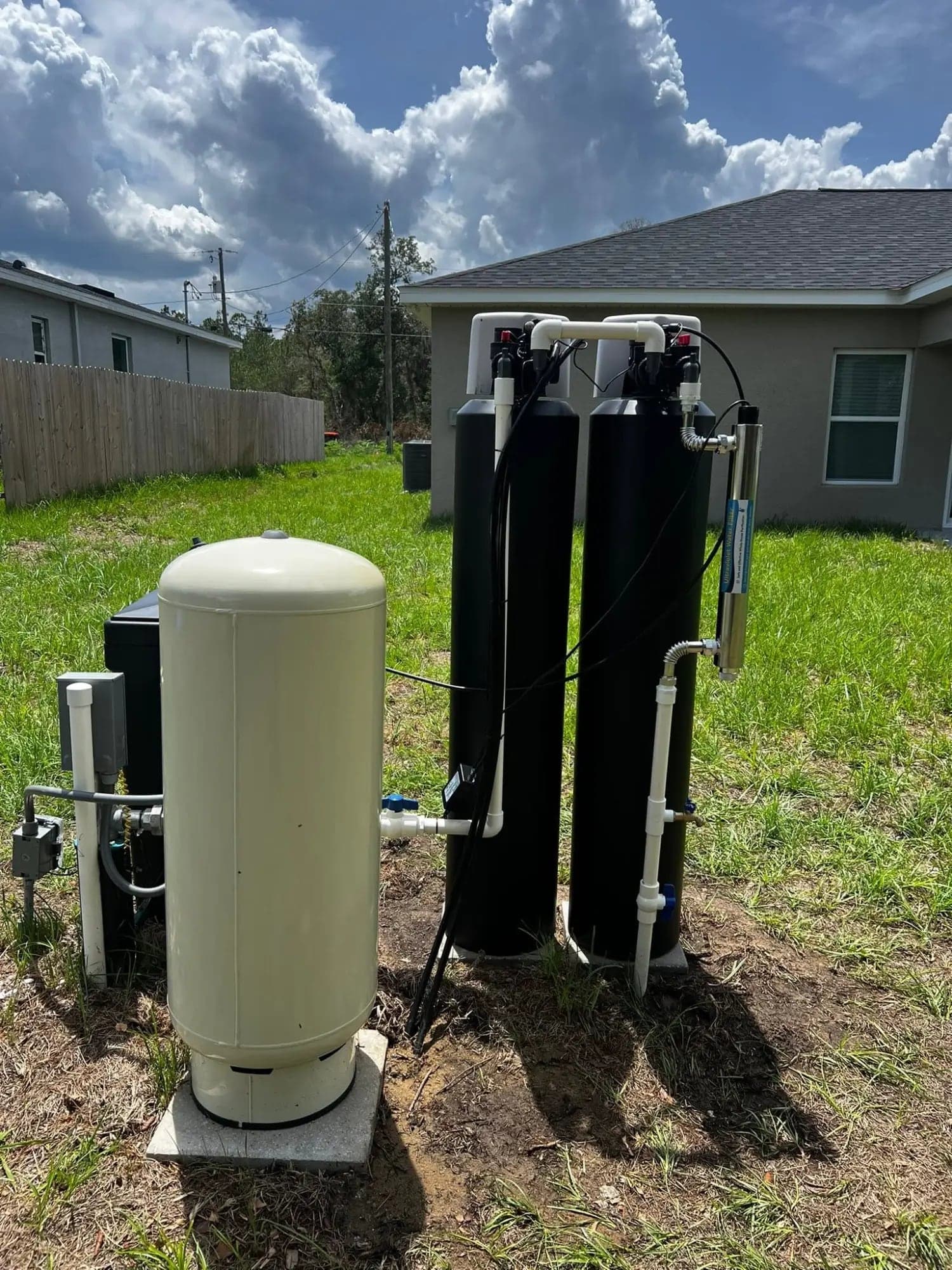
Photo above: an existing Knight installation from our gallery. It illustrates treatment equipment, not a water-quality finding for any town named below.
What could be causing the problem?
- Orange or brown stains: Iron may be a cause. Manganese can also leave dark staining. Discoloration can have other causes, including plumbing, so the stain alone is not a diagnosis.
- Rotten-egg smell: Hydrogen sulfide may be responsible. If the smell only occurs when you use hot water, the water heater may also be involved. Our rotten-egg odor guide explains what to check first.
- White, chalky buildup: Hard water can leave mineral deposits on fixtures, shower doors and appliances. Calcium and magnesium are common hardness minerals.
- Concerns you can't see or smell: Some contaminants, including PFAS, can't be identified by appearance or odor. The right laboratory test is needed to know what is present. Clear water is not a complete water-quality test.
The Minnesota Department of Health's odor guide explains how sulfur odors can originate in groundwater, plumbing or a water heater. The CDC's treatment guide explains hardness and why different systems address different substances.
What about North Port and surrounding communities?
North Port, Sarasota, Venice, Nokomis, Osprey, Englewood, South Venice, Wellen Park and Warm Mineral Springs do not all share one water supply or one water problem. Some homes use public water; others rely on private wells. Your town name alone cannot establish what is in your tap water.
North Port Utilities identifies a mix of surface water, groundwater and purchased treated water among its supplies. Sarasota County's utility and the cities of Sarasota and Venice are also distinct systems. Check your bill to identify your provider, rather than assuming the nearest city's report applies to your home.
There are documented local findings worth understanding:
- Sarasota County utility: Its first-quarter 2025 PFAS results report detections at specific sampling locations. Those results are not a test of every Sarasota County home or of each separate city utility.
- Englewood: Florida DEP's Englewood Fire Training Center record documents localized groundwater contamination and one of 15 nearby potable wells exceeding the advisory level used during the 2019 sampling. That historical, site-specific finding does not establish a townwide problem today.
These findings do not demonstrate that population growth or aquifer depletion caused a particular home's water problem. They also do not establish that every nearby home needs whole-house reverse osmosis.
Where should you start?
For public water, read your own utility's current water-quality report and notices. For a private well, arrange tests suited to the concerns at your property. If the water changes, note when it started, which faucets are affected, and whether the problem occurs with hot water, cold water or both.
Knight's free in-home water test can help with screening and equipment planning for concerns such as hardness, iron, sulfur, chlorine, pH and total dissolved solids. It is not a substitute for appropriate laboratory testing for PFAS, bacteria or other health-related contaminants. Ask which substances a test measures and which require a certified laboratory. A total-dissolved-solids reading cannot identify PFAS or certify that water is safe.
What can you do about it?
The solution should fit the results:
- Hardness and scale in well water: A water softener may help with the minerals that cause buildup. Sizing and any pretreatment should follow the well-water results and household demand.
- Iron staining or sulfur odor: Iron and sulfur treatment can be designed for the measured water conditions. If the source is the water heater or plumbing, that issue needs attention too.
- Dissolved contaminants affecting whole-home use: Whole-house reverse osmosis may be an option when testing and household needs justify it. Review the measured contaminants, pretreatment, water demand, reject-water handling and maintenance before choosing equipment. It is not the automatic answer to a smell, a stain or a town name.
- A specific contaminant concern: Use the appropriate laboratory results and verify the selected equipment's reduction claims. A softener addresses hardness; it is not a general contaminant-removal system.
North Port well-water problems? Start with your results
If you live in North Port, Sarasota, Venice, Nokomis, Osprey, Englewood or the nearby communities above, start with the problem you're noticing: staining, buildup, odor or a specific water-quality concern.
For North Port homeowners considering a well-water softener or whole-house reverse-osmosis system, request a consultation. Share your property address, water source, symptoms and any existing laboratory results so we can discuss whether either approach fits and confirm visit availability before scheduling. Testing may point to pretreatment, a different solution or no new equipment.
Knight Home Water Solutions lists Sarasota County in its service area. For the surrounding communities, contact us with the same details to confirm service availability. Englewood spans Sarasota and Charlotte counties, so coverage must be confirmed for your address.
The goal is to understand your water first, then choose a solution that fits.