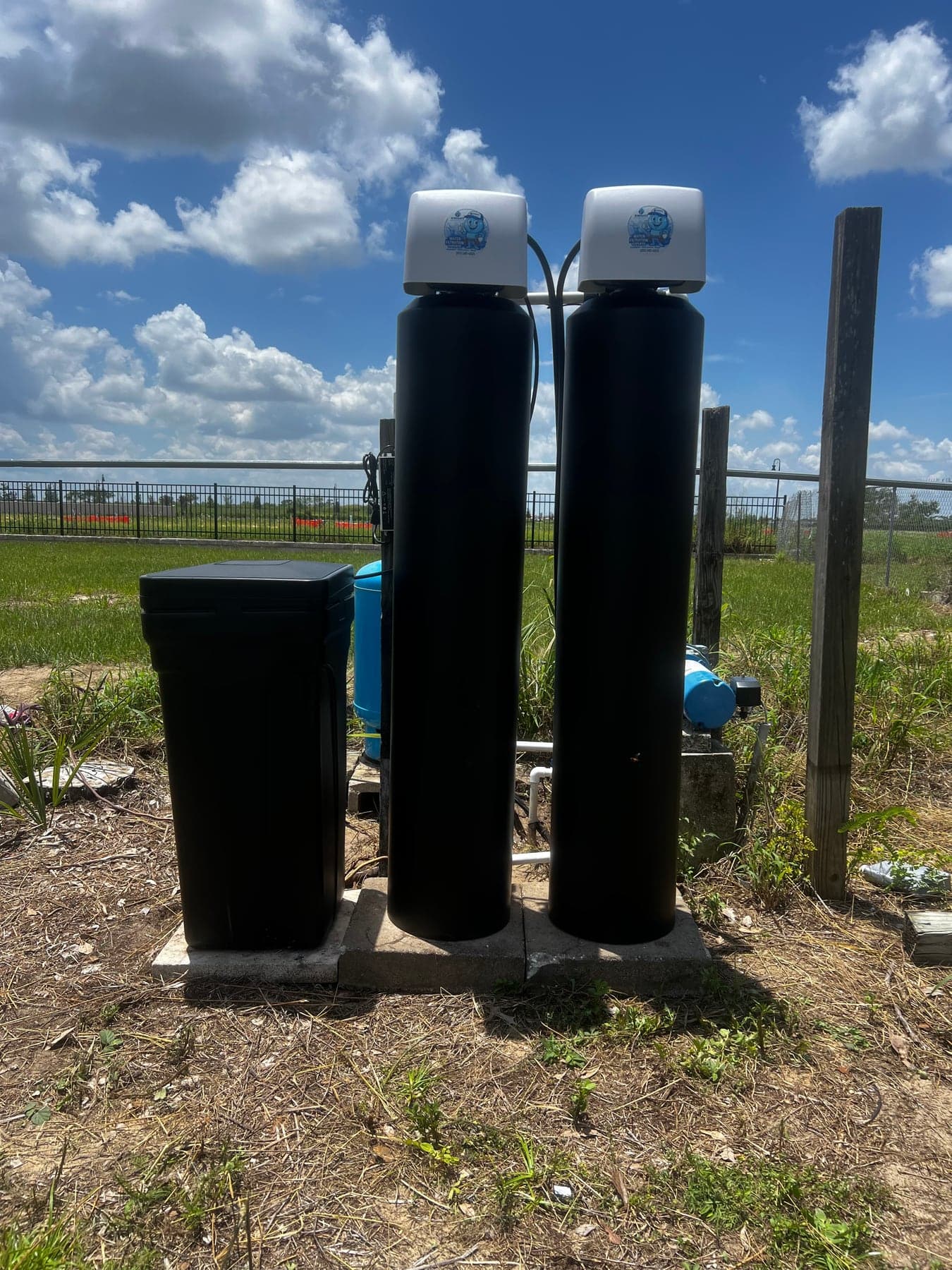
Orange stains, black residue, metallic taste, and rotten-egg odor are clues—not complete diagnoses. Florida private-well treatment should begin with a properly collected water sample, a clear distinction between aesthetic and health concerns, and a treatment train designed around the measured chemistry.
That process matters because private wells are not regulated, treated, or routinely monitored like public water systems. The homeowner is responsible for testing and maintenance. A basic in-home screen can help plan equipment, but safety questions require an appropriate state-certified laboratory.
What should every private-well owner test?
The CDC's well-water testing guidance recommends testing at least once each year for total coliform bacteria, nitrates, total dissolved solids, and pH. It also recommends asking the local health department which additional germs or chemicals matter in the area.
Testing is especially important after:
- flooding or major storm impacts;
- a well, pump, pressure tank, or plumbing repair;
- land disturbance or a nearby waste release;
- a change in color, taste, or odor;
- a long period when the well was unused;
- pregnancy or an infant joining the household; or
- unexplained gastrointestinal illness in the home.
Depending on the property and symptoms, the test panel may also include iron, manganese, hardness, hydrogen sulfide indicators, arsenic, lead, pesticides, volatile organic compounds, or other locally relevant analytes. The laboratory or health department should help define the panel; testing everything is expensive and may not be necessary.
What causes orange or reddish-brown stains?
Orange staining often points toward iron, but the treatment decision requires more detail. Iron can be dissolved and invisible when it leaves the well, then oxidize and form reddish particles after exposure to air. It can also already be present as particles, or appear alongside iron bacteria and slime.
Useful diagnostic observations include:
- whether water leaves the tap clear and turns orange later;
- whether toilets contain orange slime or sediment;
- whether hot and cold water behave differently;
- whether the odor or staining changes after the well sits unused;
- pH, hardness, alkalinity, and dissolved oxygen; and
- the measured form and concentration of iron.
The Florida Department of Health's well-water odor and staining fact sheet discusses iron, sulfur odors, and bacteria-related causes. It also reinforces annual testing and retesting after disinfection.
Iron is often an aesthetic and operational problem rather than proof of a health hazard. It can stain fixtures and laundry, create metallic taste, foul plumbing, and interfere with treatment equipment. Other harmful substances may be colorless and odorless, which is why appearance cannot substitute for a laboratory result.
What causes rotten-egg odor in well water?
A rotten-egg smell is commonly associated with hydrogen sulfide gas, but the source can be the aquifer, sulfur bacteria, plumbing, or the water heater. Treating the entire well when the odor only occurs at one hot tap wastes money and may not solve the cause.
Start by comparing:
- Cold water at a tap near the pressure tank. This is closest to the untreated source.
- Cold water at distant fixtures. A difference can indicate a plumbing or distribution issue.
- Hot water only. Odor limited to hot water may involve the water heater or anode rod.
- Water after several hours of non-use. Stagnation can change odor intensity.
- Water immediately after well service or disinfection. Temporary conditions may differ from the normal baseline.
Do not intentionally inhale concentrated gas from a closed container. Let a qualified professional collect and interpret samples when the odor is strong or the source is uncertain.
Can you identify bacteria by taste, smell, or color?
No. Disease-causing microorganisms may be present without an obvious sensory warning, while harmless iron or sulfur bacteria can produce dramatic stains, slime, or odor. Only appropriate microbiological testing can answer the safety question.
The CDC advises using a state-certified laboratory. If harmful germs or chemicals are found, its well-water treatment guidance says not to drink the water until the issue is treated and the water is tested again to confirm treatment worked.
During a suspected contamination event, follow the local health department's instructions. Bottled water, boiling, shock disinfection, continuous disinfection, plumbing sanitation, or repairs may be recommended depending on the contaminant and source. Boiling does not remove chemical contamination and can concentrate some dissolved substances.
Why is pH important before choosing equipment?
pH affects corrosion, oxidation, media performance, disinfection, and the way iron or manganese behaves. Two wells with the same iron concentration can require different treatment if pH, alkalinity, flow, or the form of iron differs.
Other measurements that influence design include:
- peak service flow rate;
- well and pump production;
- pressure-tank settings;
- hardness and alkalinity;
- iron and manganese concentration and form;
- sulfur conditions;
- turbidity or sediment load; and
- microbiological results.
Equipment that looks adequate on a contaminant chart may fail if the home's flow exceeds its service rate or if the media does not have enough contact time.
Does a water softener remove iron?
Sometimes a softener can handle limited dissolved iron under suitable water conditions and within the manufacturer's specifications. It is not a universal iron-removal device. Oxidized iron, iron bacteria, high concentrations, unfavorable pH, or sulfur conditions can foul resin and require dedicated pretreatment.
The correct answer should name:
- the measured iron concentration;
- whether the sample contains dissolved or particulate iron;
- the softener manufacturer's iron limit;
- required cleaning or regeneration settings; and
- what protects the resin from fouling.
If the provider cannot explain those points, the recommendation is not yet complete.
How are iron and sulfur commonly treated?
Treatment is matched to the chemistry. Options may include oxidation, catalytic media, aeration, chemical feed, retention, backwashing filtration, or other problem-specific processes. Each has operating limits and maintenance needs.
A treatment train might need to:
- remove sediment or oxidize dissolved material;
- provide enough contact time for the reaction;
- filter the oxidized particles;
- address hardness after upstream problems are controlled;
- disinfect appropriately pretreated water when microbes are a concern; and
- provide point-of-use drinking-water treatment for a separate dissolved-contaminant objective.
That sequence is illustrative, not a design for every well. The order changes with the test results and equipment.
When does UV purification make sense?
UV uses ultraviolet light to inactivate microorganisms. According to the CDC's home treatment overview, UV with prefiltration can address parasites, bacteria, and viruses, but it does not remove chemicals.
Effective UV treatment depends on:
- sufficiently clear water and appropriate prefiltration;
- validated UV dose at the home's maximum flow;
- a clean quartz sleeve;
- a functioning lamp and power supply;
- scheduled lamp replacement;
- sanitary plumbing after the UV unit; and
- testing that confirms the broader system is safe.
UV should not be installed as a cosmetic fix for odor or staining. Iron, manganese, hardness, sulfur, and turbidity may need treatment upstream so the UV light can reach microorganisms effectively.
What should happen after treatment is installed?
Commissioning proves the system was installed; verification shows whether it achieved the objective. The plan should define a post-treatment baseline and a maintenance schedule before installation.
Verify:
- treated-water results for the target analytes;
- microbial results when disinfection is involved;
- pressure and flow at peak demand;
- backwash and drain operation;
- bypass and shutoff labeling;
- salt, chemical, filter, lamp, or media service intervals; and
- the date for the next laboratory test.
If the well was contaminated, follow health-department guidance on disinfection and confirmation samples. Do not assume clear water means the microbiological problem is resolved.
How does Knight Home Water Solutions approach a well-water problem?
We separate equipment-planning measurements from health-related laboratory questions. Knight Home Water Solutions can inspect the system, screen the water, document flow and household demand, and explain which iron and sulfur treatment, softening, filtration, or UV purification stages may fit the measured conditions.
When a certified laboratory is needed, that comes before a claim about safety. When the issue is operational—staining, odor, scale, or equipment fouling—we still test first so the recommendation targets the cause.
Request a water evaluation if your well has changed color, taste, or odor, or if existing equipment is not controlling the problem. Bring any laboratory reports and service records you already have; they make the diagnosis faster and more defensible.