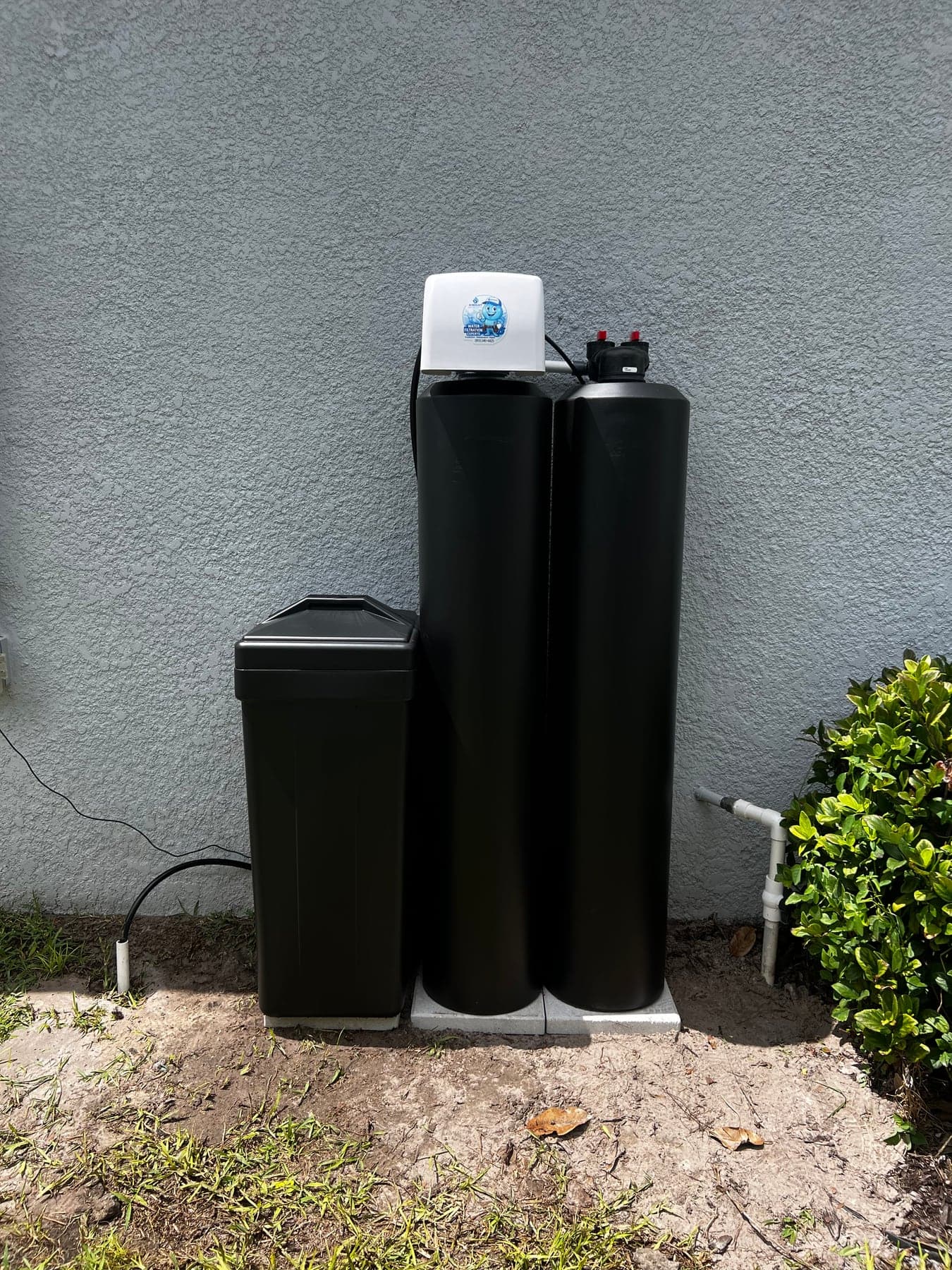
Florida's hard water sneaks up on you. The damage is gradual, so a lot of homeowners don't connect the dots until an appliance fails early. Here are seven signs it might be time for a softener.
1. Spots on everything
Glasses, silverware, shower doors, and faucets get a cloudy, white film no matter how much you scrub. That's mineral residue left behind as water dries.
2. Your skin and hair feel different
Hard water makes it tough to rinse soap away, leaving skin dry and hair dull or flat.
3. Soap won't lather
You go through more soap, shampoo, and detergent than you should — and still don't get a good lather.
4. Stiff, scratchy laundry
Clothes and towels come out of the wash feeling rough and looking dingy over time.
5. Low water pressure
Scale builds up inside pipes and fixtures, slowly choking your flow.
6. Appliances failing early
Water heaters, dishwashers, and coffee makers wear out faster when they're fighting scale every day.
7. A constant cleaning battle
You're always scrubbing mineral buildup off fixtures and tile.
If a few of these sound familiar, hard water is very likely the culprit.
What to do next
The only way to know for sure is to test. A free in-home water test tells you exactly how hard your water is and whether a softener makes sense for your home — no pressure, no obligation.
Which signs are strongest when they appear together?
The best evidence is a pattern: visible scale, poor soap performance, repeated appliance maintenance, and a hardness test that confirms the mineral load. One symptom alone can have another cause. Low pressure, for example, may come from a clogged aerator, old piping, a valve problem, or sediment rather than hardness scale.
Use a simple home audit:
- Photograph scale before cleaning and note how quickly it returns.
- Compare hot-water and cold-water fixtures.
- Check faucet aerators and showerheads for mineral deposits.
- Review water-heater and appliance service history.
- Record detergent and cleaning-product use.
- Test hardness at an untreated cold-water tap.
The pattern helps distinguish a whole-home mineral problem from one failing fixture.
How hard is water in the Tampa area?
The City of Tampa reports seasonal hardness of about 140 to 300 parts per million, or 8 to 17 grains per gallon. That is a meaningful range, so a neighborhood estimate should not be used to size equipment. Read the city's current hardness guidance and test the home's actual tap.
Private wells can differ substantially—even between nearby properties—because depth, geology, pumping, and plumbing affect what reaches the house. A well-water recommendation may also need iron, sulfur, pH, sediment, or microbiological testing.
What can a softener fix—and what can it not fix?
A standard ion-exchange softener reduces calcium and magnesium. That can control scale and improve soap performance. It does not automatically remove chlorine, sediment, PFAS, bacteria, viruses, or every form of iron.
The CDC's home water treatment overview explains that different technologies remove different germs or chemicals. If the home has more than a hardness problem, it may need properly ordered filtration, disinfection, or point-of-use treatment in addition to softening.
This is why a softener should not be sold as a universal purifier. Read water softener vs. whole-house filter before comparing combination packages.
Can hard water affect appliances and plumbing?
Yes, scale can build on heating surfaces, valves, fixtures, and narrow water passages. Hot water accelerates mineral precipitation, so water heaters, dishwashers, coffee makers, and shower components often show the clearest symptoms.
The cost is not always a sudden breakdown. It can be:
- more frequent descaling;
- slower heat transfer;
- reduced flow through fixtures;
- repeated replacement of valves or heating elements; and
- shorter useful life for equipment exposed to scale.
Actual impact varies with hardness, temperature, water use, and appliance design. A water test and equipment inspection provide better evidence than a generic savings promise.
Does a softener help skin, hair, and laundry?
Softened water changes how soap behaves and rinses. Many homeowners report needing less soap and seeing less mineral film. That can change the feel of skin, hair, towels, and clothing.
Those experiences are personal, not medical outcomes. Dry skin, scalp irritation, or hair changes can have many causes. A water provider can measure hardness and explain treatment performance, but should not diagnose a health condition.
How should a water softener be sized?
Correct sizing uses more than the number of bathrooms. A professional should consider:
- measured hardness;
- people in the household and daily demand;
- simultaneous fixture flow;
- resin capacity and service-flow rating;
- iron or other conditions that affect resin;
- desired regeneration interval; and
- salt and water efficiency.
The EPA's cation-exchange softener guidance notes that regeneration can consume substantial salt and water. Demand-initiated controls and correct programming help avoid unnecessary cycles.
What should happen after installation?
Test treated water, save the baseline, and document the settings. The homeowner should know how to add salt, identify a salt bridge, use the bypass, understand regeneration, and recognize abnormal water use.
Schedule service when:
- hardness returns before regeneration;
- salt use changes sharply;
- the unit regenerates too often or not at all;
- water pressure changes across the equipment; or
- iron, sediment, or odor begins fouling the system.
What is the honest next step?
Measure hardness and inspect the whole water path. Knight Home Water Solutions can test the water, check household demand, and explain whether a professionally installed softener fits the evidence.
If the problem is chlorine taste, sediment, well-water iron, sulfur, or a drinking-water objective, we will separate that from hardness rather than claiming one tank fixes everything. Request a free in-home water test to start with the numbers.