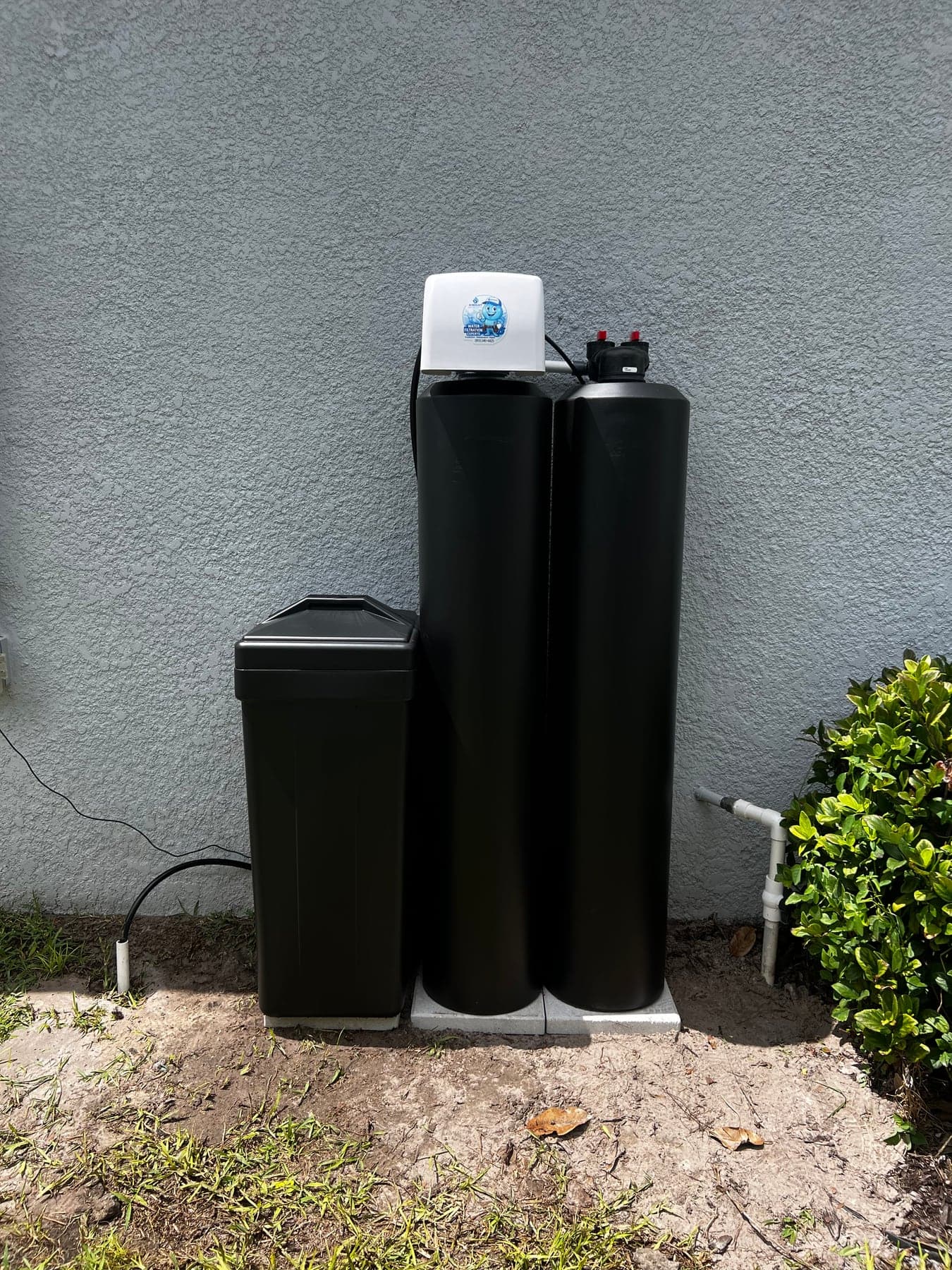
If you live in Tampa Bay and your dishes come out spotty or your skin feels dry after a shower, you're not imagining it. Most water across our area is hard — and that has a real, measurable effect on your home.
What "hard water" actually means
Hard water simply means there's a lot of dissolved minerals in it — mostly calcium and magnesium. These minerals are picked up as water moves through Florida's limestone. They aren't harmful to drink, but they cause a long list of everyday annoyances.
How hard water shows up at home
- White, chalky spots on glasses, dishes, and faucets
- Soap and shampoo that won't lather well
- Dry, itchy skin and dull hair
- Scale building up inside your water heater and pipes
- Appliances that wear out sooner than they should
How hard is Tampa's water?
Water hardness is usually measured in grains per gallon (gpg) or parts per million (ppm). The City of Tampa reports that hardness fluctuates through the year from roughly 140 to 300 ppm, or 8 to 17 gpg. Review the city's current water hardness FAQ for its source data and homeowner guidance.
The range is wide enough to affect equipment sizing. A system sized from an 8-gpg assumption may regenerate too often or underperform when the source is closer to 17 gpg. The only way to know your home's current number is to test the tap.
The good news: hard water is one of the easiest water problems to fix.
What you can do about it
A water softener removes the hardness minerals before water reaches your taps. That means no more spots, softer skin, easier cleaning, and longer-lasting appliances.
The first step is always a free in-home water test, so you know exactly what you're dealing with before spending a dollar.
Is Tampa's hard water unsafe?
No. Hardness alone does not mean the water is unsafe. Calcium and magnesium are naturally occurring minerals, and the City of Tampa explains that a softener is mainly an aesthetic and household-performance choice.
That distinction keeps the recommendation honest. A water softener can reduce scale and change how water behaves with soap, but it is not a substitute for a filter certified to reduce a chemical contaminant or for disinfection when microbes are present.
For regulated water-quality information, use the city's current annual Water Quality Report. A Consumer Confidence Report explains utility testing. A tap-side hardness test answers a different question: what mineral load is reaching the equipment in your home today.
What does hard water cost a household?
Hardness usually shows up as cumulative maintenance rather than one dramatic failure. Scale can collect on heating elements, valves, fixtures, shower glass, and appliances. Soap reacts with hardness minerals, which can increase cleaning effort and product use.
Watch for patterns across the home:
- recurring white deposits after water dries;
- reduced flow at showerheads and faucet aerators;
- scale in kettles, coffee makers, and water heaters;
- glassware that stays cloudy after washing;
- soap that requires more product to lather; and
- fixtures that need frequent descaling.
One sign alone does not size a system. Together, these symptoms justify measuring hardness and inspecting the plumbing.
Does a whole-house filter fix hardness?
Usually not. A filter and a softener solve different problems. Carbon media may reduce specified taste, odor, or disinfectant concerns. Sediment media can capture particles. Ion-exchange softening targets calcium and magnesium.
The CDC's home treatment guide separates softeners from filtration and UV systems because each technology addresses different substances. If a Tampa home has both hardness and a filterable taste or odor concern, it may need a coordinated treatment train rather than one oversized tank.
Read our softener vs. whole-house filter guide for the practical differences.
How is a Tampa water softener sized?
Good sizing uses measured conditions and household demand. The inputs include:
- hardness at the tap;
- household occupancy and estimated daily use;
- peak flow from simultaneous fixtures;
- iron, manganese, sediment, or other interfering conditions;
- resin capacity and service-flow specifications; and
- a reasonable regeneration interval.
Bigger is not always better. An oversized unit can sit too long between regenerations, while an undersized unit may regenerate frequently, waste salt and water, or deliver hardness before the next cycle.
The EPA notes that regeneration efficiency matters because softeners consume water and salt. Its water-efficient softener guidance recommends demand-initiated operation and proper maintenance rather than unnecessary scheduled cycling.
What should you ask before buying a softener?
Ask for the actual test result and the assumptions behind the recommendation. A proposal should explain:
- measured hardness in ppm or grains per gallon;
- expected service flow and capacity;
- regeneration trigger and estimated frequency;
- salt and water use;
- what happens if seasonal hardness changes;
- warranty coverage and routine maintenance; and
- whether any upstream filtration is required.
If a company cannot connect the system size to those inputs, the recommendation is incomplete.
How can you confirm a softener is working?
Test the untreated and treated water after installation, record the results, and keep them with the equipment settings. Recheck if spotting or scale returns, salt use changes unexpectedly, or the system begins regenerating at unusual intervals.
Knight Home Water Solutions can test the home's hardness, inspect the plumbing and flow demands, and explain whether softening is likely to solve the symptoms. Request a free in-home water test for a recommendation tied to your actual tap.