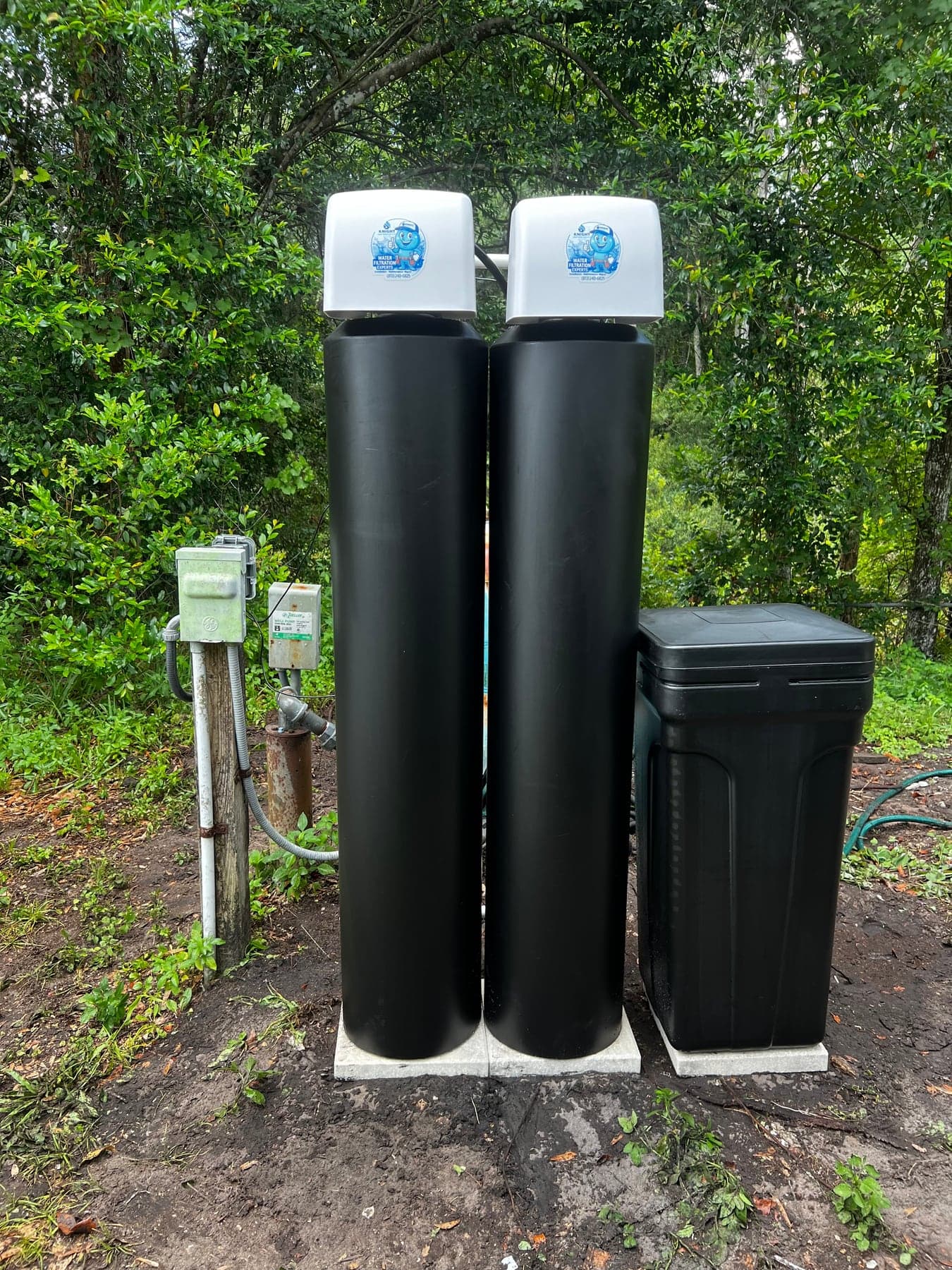
Pasco County is growing fast, and homes here get their water two very different ways: from a private well or from city (municipal) water. The right treatment depends on which one you have.
City water in Pasco
City water is treated before it reaches you, usually with chlorine to keep it safe. That's good for safety, but it often means:
- A chlorine taste or smell, like a swimming pool
- Hard water and scale, since treatment doesn't remove minerals
- Generally consistent quality year-round
For city homes, the most common upgrades are a softener plus carbon filtration to take out the chlorine taste.
Well water in Pasco
Private wells aren't treated by a utility — what's underground is what comes out of your tap. In our area, that often means:
- Iron, which causes orange or brown staining
- Sulfur (hydrogen sulfide), the source of that rotten-egg smell
- Hardness, just like city water
- The possibility of bacteria, which you can't taste or see
Why the difference matters
A system built for city water won't necessarily fix well-water problems like iron, sulfur, or bacteria — and vice versa. That's why we never recommend equipment until we've tested your specific water.
Same county, same street — two homes can need completely different systems.
The first step is the same
Whether you're on a well or city water, start with a free in-home water test. We'll measure what's actually in your water and recommend only what you need.
How can you confirm the home's water source?
Do not rely only on a listing description. Confirm the source before buying treatment equipment or evaluating an existing system.
Look for:
- a utility bill and water meter near the property line;
- a well head, pressure tank, pump controls, or treatment equipment;
- property disclosures and well permits;
- a septic system, which often—but not always—appears with a private well; and
- separate irrigation and household water sources.
Some homes use municipal water indoors and a private well for irrigation. Others have changed sources over time while old equipment remains connected or abandoned. Trace the plumbing and verify which source supplies each fixture.
What monitoring protects city water customers?
Public utilities operate under federal and state drinking-water rules, conduct required testing, and issue annual Consumer Confidence Reports. The report explains the source, detected levels, violations if any, and required health language.
Municipal compliance does not guarantee identical water at every kitchen faucet. Building plumbing, service-line material, stagnant water, a failing water heater, or neglected filters can change conditions after water leaves the utility. A household concern may require checking both the utility report and the tap.
City-water treatment commonly focuses on household preferences and operations:
- hardness scale;
- chlorine or chloramine taste and odor;
- sediment from plumbing or utility work;
- point-of-use drinking-water preferences; and
- protection of appliances and fixtures.
Equipment should carry certified claims for the exact treatment objective.
What responsibility comes with a private well?
Private wells are not routinely treated or monitored by a public utility. The homeowner is responsible for protecting the well, testing the water, maintaining treatment equipment, and responding to changes.
The CDC recommends annual well testing for total coliform bacteria, nitrates, total dissolved solids, and pH, with additional analytes based on local risks. It also recommends testing after flooding, repairs, nearby land disturbance, or changes in taste, odor, or color.
Use a state-certified laboratory for health-related testing. A hardness or iron field test can support equipment planning, but cannot prove the absence of microbes, nitrates, arsenic, pesticides, or other contaminants.
What do iron, sulfur, and hardness mean for treatment?
The symptoms can overlap, but the treatment processes differ.
- Hardness is mainly calcium and magnesium and is commonly treated with ion exchange.
- Iron can be dissolved, particulate, or associated with bacteria, changing the treatment method.
- Sulfur odor may come from source water, sulfur bacteria, plumbing, or the water heater.
- Sediment can foul valves, resin, filters, and UV equipment.
- Low or high pH affects corrosion and media performance.
- Microbes require appropriate laboratory testing and disinfection planning.
Read our detailed guide to Florida well-water iron, sulfur, and bacteria for a test-first sequence.
Can one system treat every well-water problem?
No. The CDC's home treatment overview emphasizes that different technologies remove different germs or chemicals. A softener, oxidizing filter, carbon filter, reverse-osmosis membrane, and UV unit each perform different jobs.
A private-well treatment train may require pretreatment before softening or UV. For example, iron or turbidity can foul downstream equipment, and UV needs sufficiently clear water to deliver the intended dose. System order should follow test results and equipment requirements.
What should you test before buying a Pasco County home?
For a private well, request available laboratory reports, well records, treatment service history, and seller disclosures. Then arrange current testing appropriate to the property.
The review should answer:
- Is the well structurally sound and protected from surface drainage?
- What are the microbiological results?
- What are the nitrate, pH, and dissolved-solids results?
- Are iron, manganese, sulfur, hardness, or sediment creating operational problems?
- Does existing equipment match the test results and household flow?
- When were filters, lamps, media, pumps, and pressure tanks last serviced?
- What ongoing salt, chemical, electricity, and service costs should be expected?
For municipal water, review the utility report, inspect plumbing and service-line information, and test household-specific concerns rather than ordering a full private-well panel without a reason.
How should treatment be maintained?
Create a written schedule. Water treatment is not “install it and forget it.” Depending on the system, maintenance may include filter changes, salt replenishment, backwash inspection, chemical feed, UV lamp replacement, quartz-sleeve cleaning, tank sanitization, media replacement, and laboratory retesting.
Keep records of:
- untreated and treated baseline results;
- equipment model and serial numbers;
- control settings;
- service dates and parts replaced;
- laboratory reports; and
- changes in taste, odor, color, pressure, or water use.
Good records make future troubleshooting faster and show whether treatment is still achieving its purpose.
What is the right first call?
Start by identifying the source and the decision you need to make. Knight Home Water Solutions can inspect the home's equipment, screen water for treatment planning, document symptoms and flow, and explain which next tests are appropriate.
For a health-related well concern, use a certified laboratory and local health guidance. For hardness, iron, sulfur, filtration, and equipment performance, request a water evaluation so the recommendation is based on this home—not a countywide assumption.